6
min
·
May 2
The catch isn't a pull — it's an anchor.
Most swimmers pull water backward. Elite swimmers don't. Here's the difference between a stroke that tires you out and one that moves you forward.
The catch isn't a pull – it's an anchor.
Most swimmers think of the freestyle stroke as pulling water backward. You reach forward, grab water, pull it behind you, and your body moves forward. Logical. Simple. And almost completely wrong.
The swimmers who move fastest through water aren't pulling at all. They're anchoring.
Understanding this difference is the single most important technical shift I make with adult swimmers. It changes how the stroke feels, how much energy it costs, and how far each stroke actually takes you.
What pulling actually looks like
When a swimmer pulls, the first thing that moves after the hand enters the water is the elbow. It drops. The forearm follows. The hand sweeps wide or straight back almost immediately.
From above, this looks efficient. You can see the arm moving, the water being displaced, the body progressing. But from the side — or better, from underwater — you see the problem.
A dropped elbow means you're pressing down on water, not back. Your propulsive surface shrinks from your entire forearm and hand to just your palm. You're doing twice the work for half the result.
The hand is moving. Water is moving. But the swimmer isn't moving as much as they should be.
What anchoring looks like
An anchor starts with patience.
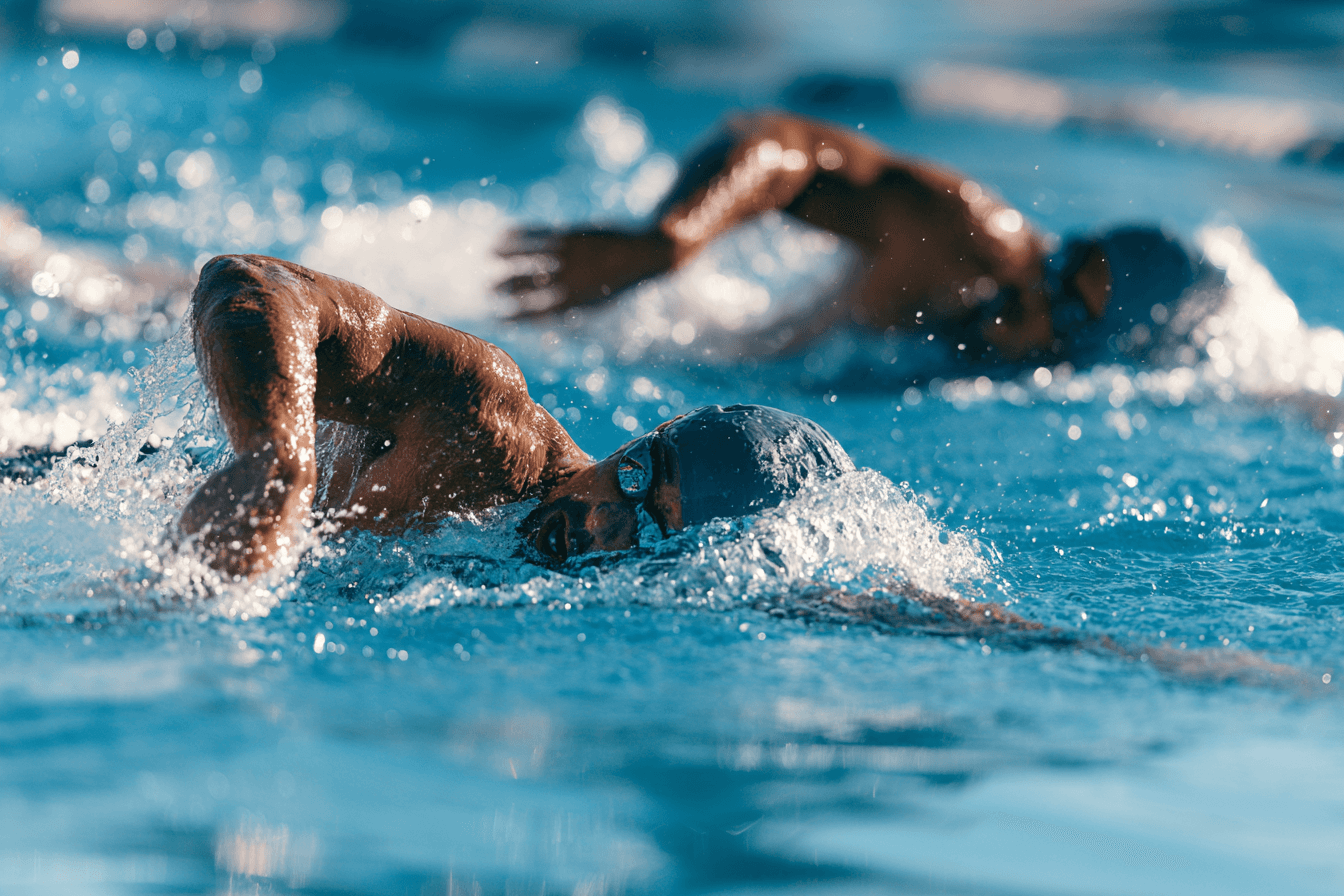
After your hand enters the water and extends forward, you pause — not long, maybe half a second — while your body rotates onto that side. During this pause, your hand and forearm drop together, elbow high, until your fingertips point toward the pool floor.
Now you're set. Your forearm is vertical. Your palm faces backward. Your elbow is bent at roughly 90 degrees and staying there. This is the catch position — and from here, you don't pull. You hold.
You hold that position fixed in the water — like a paddle planted in a river — while your body rotates past it. Your lats and core generate the power. Your shoulder and arm are just the anchor point.
The drill that teaches it
The best way to feel the difference is the fingertip drag drill, combined with a focus on the pause.
Here's how:
Swim normal freestyle, but drag your fingertips along the water surface during the recovery phase
When your hand enters, resist the urge to immediately begin the pull
Let your elbow rise as your hand drops — keep the elbow above the wrist above the fingertips
Engage your lats — the big muscle under your shoulder blade — before anything else moves
You'll feel slower at first. That's not a problem. That means you're actually holding the water instead of slipping through it.
Why this is hard to fix
The pulling habit is deeply ingrained for one simple reason: it feels like it's working.
When you pull hard, you can feel the effort. You can feel the water moving. There's a sensation of work happening. The anchor catch, especially when you're learning it, feels passive. Lazy, even.
But passive is exactly what the arm should be. The power in freestyle doesn't come from arm strength. It comes from hip rotation transferred through a stable, anchored arm into forward momentum.
Once you feel that — really feel the water loading against your forearm before you drive — you understand why elite swimmers look so effortless. They're not trying less. They're wasting less.
What to practice this week
Pick one length per set to think only about the catch. Don't try to fix your whole stroke at once.
Enter the water thumb-side down, fingertips first
Let the hand sink slightly before initiating any pull
Keep that elbow high and wide until the forearm is vertical
Feel the pressure build against your palm and forearm before you drive
Six lengths of deliberate catch work is worth more than thirty lengths of mindless laps. Start there.
Book a consult
Better swimming starts with one session.
Tell me where you are and where you want to be. I'll tell you if I can help, and if I can't — who can.
Usually replies within 24 hours