6
min
·
May 2
Why I make every swimmer count strokes on length one.
The first length tells me everything about where a swimmer's head is. Here's what I'm actually measuring — and why it has nothing to do with technique.
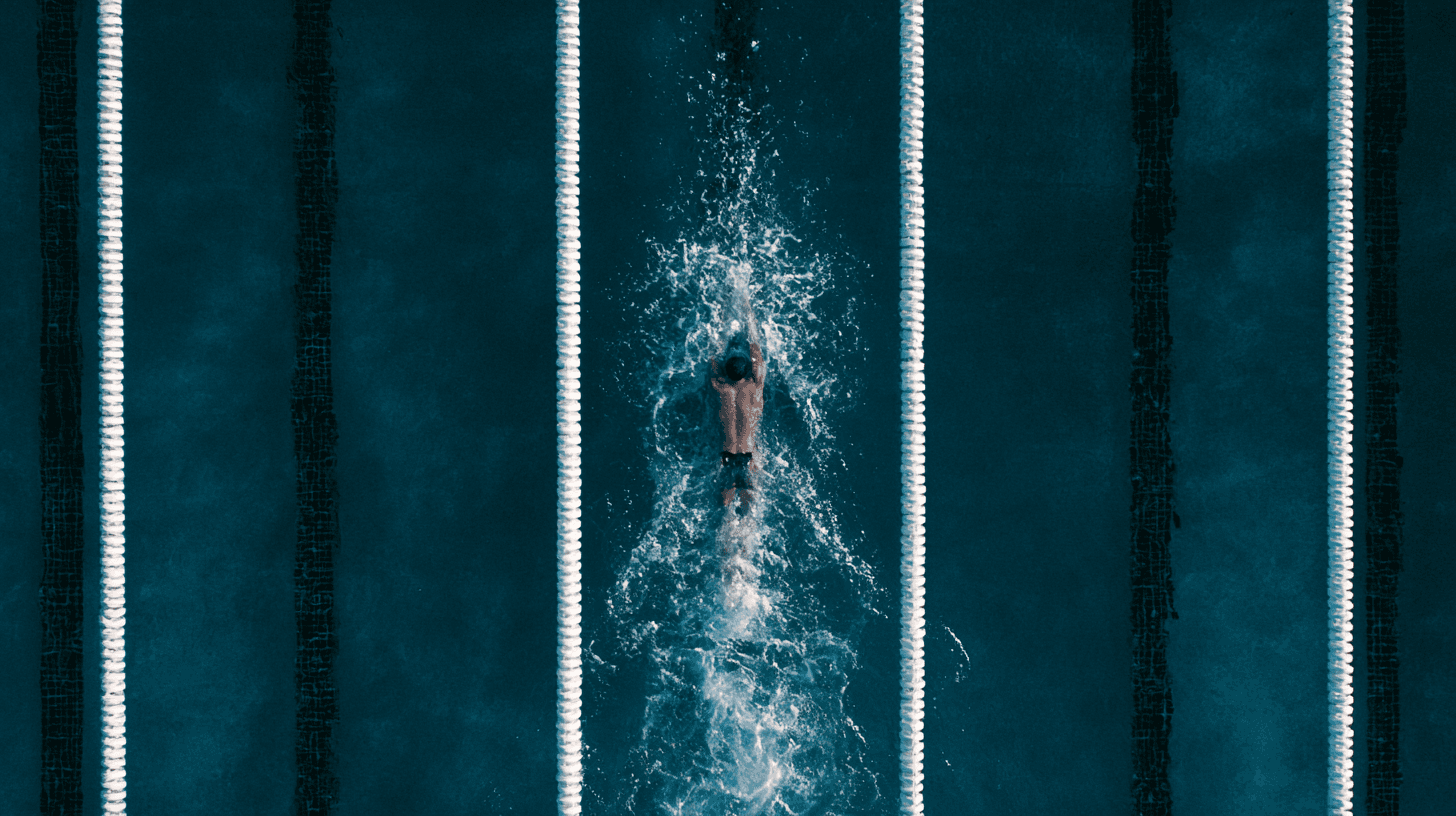
The first thing I ask every new swimmer to do is swim one easy length of the pool and count their strokes.
Not a timed length. Not a technical length. Just easy, comfortable freestyle, from wall to wall, counting every stroke.
They always think I'm assessing their technique. I'm not. I'm assessing their attention.
What the number tells me
The stroke count itself is almost irrelevant. For a 25m pool, most adults land somewhere between 16 and 28 strokes. There's no magic number — it varies with height, technique, and how hard they're pushing.
What I'm watching is whether they know the number without hesitation.
Some swimmers finish the length and immediately say "nineteen." They counted from the first stroke, maintained awareness through the turn, and kept tracking all the way to the wall.
Others finish and look uncertain. "I think around twenty-two? Maybe twenty-five?" They drifted somewhere in the middle.
Both swimmers can technically swim. But only one of them was actually present in the water.
Why presence matters more than technique
Swimming is unusual as a sport because the feedback loop is slow. In running, you feel the ground. In cycling, you feel the road. In water, the medium is forgiving — it moves with you, hides your mistakes, and lets you coast on momentum without noticing.
This makes it very easy to swim on autopilot. To go through the motions. To "put in the yards" without actually training anything.
Mindless laps make you fitter. Mindful laps make you faster.
Stroke counting is a forcing function for presence. You can't drift and count at the same time. You have to be in the stroke, aware of your hand entry, noticing the catch, feeling the drive — because that's the only way to keep accurate track.
What I do with the number once we have it
Once a swimmer knows their baseline stroke count, we have a reference point for everything else.
If we're working on the catch and your count goes from 22 to 20 at the same effort level, something improved. If we add a pull buoy and your count stays the same, your kick was doing nothing. If your count spikes when you're tired, your technique is breaking down earlier than you think.
The number becomes a mirror for what's happening in the water when you can't see yourself.
I also use it at the start of every session. Before we do any training, any drills, any sets — one easy length, count your strokes. Some days athletes come in and their count is off by four or five from their baseline. Nine times out of ten, something else is off too — they're tired, distracted, stressed. The water knows before they do.
The deeper lesson
Counting strokes isn't a technique drill. It's a habit of attention.
The swimmers who improve fastest aren't always the most talented or the most fit. They're the ones who are genuinely curious about what's happening in their body in the water. They notice things. They ask why. They feel the difference between a good catch and a bad one before I have to tell them.
That curiosity starts with small things. Counting strokes is one of the smallest.
Start your next swim with one easy length. Count every stroke. Know the number.
Then the next length, try to do it in one fewer.
See what you notice.
Book a consult
Better swimming starts with one session.
Tell me where you are and where you want to be. I'll tell you if I can help, and if I can't — who can.
Usually replies within 24 hours